Monday, December 31, 2012

Russian Plane Crash Video Captures Moment Of Impact

Video from a dashboard camera captured the moment of impact when a passenger plane crashed into a highway at Moscow's Vnukovo Airport. The Red Wings Tu-204 was empty except for crew when it rolled off the runway at Russia's third-busiest airport Saturday, breaking into three pieces and later catching on fire. Cars on the road were hit with debris from the plane. Of the eight crew members aboard at the time of the crash, five have died, including the pilot, co-pilot, flight engineer and two flight stewards.

Four crew members were pronounced dead at the scene, while a fifth succumbed to injuries sustained in the crash, according to RT. The cause of the crash is still being investigated. According to SkyNews, it is thought that light snowfall at the time of the crash may have obscured the pilot's view of the runaway, contributing to human error. Vladimir Markin, a spokesman for Russia's main investigative agency, was quoted by Russian news agencies Sunday as saying the data recorders were being examined, along with fuel samples, the Associated Press reports. Flight documents for the plane have been taken from the airline for examination. Dashboard cameras are popular in Russia as a way of substantiating claims in court, according to Animal New York.

Hillary Clinton Admitted To New York Hospital With Blood Clot Following Concussion

Secretary of State Hillary Rodham Clinton was admitted to a New York hospital Sunday after the discovery of a blood clot stemming from the concussion she sustained earlier this month. Clinton's doctors discovered the clot Sunday while performing a follow-up exam, her spokesman, Philippe Reines, said. He would not elaborate on the location of the clot but said Clinton is being treated with anti-coagulants and would remain at New York-Presbyterian Hospital for at least the next 48 hours so doctors can monitor the medication. "Her doctors will continue to assess her condition, including other issues associated with her concussion," Reines said in a statement. "They will determine if any further action is required."

Clinton, 65, fell and suffered a concussion while at home alone in mid-December as she recovered from a stomach virus that left her severely dehydrated. The concussion was diagnosed Dec. 13 and Clinton was forced to cancel a trip to North Africa and the Middle East that had been planned for the next week. The seriousness of a blood clot "depends on where it is," said Dr. Gholam Motamedi, a neurologist at Georgetown University Medical Center who was not involved in Clinton's care. Clots in the legs are a common risk after someone has been bedridden, as Clinton may have been for a time after her concussion. Those are "no big deal" and are treated with six months of blood thinners to allow them to dissolve on their own and to prevent further clots from forming, he said.

A clot in a lung or the brain is more serious. Lung clots, called pulmonary embolisms, can be deadly, and a clot in the brain can cause a stroke, Motamedi said. Keeping Clinton in the hospital for a couple of days could allow doctors to perform more tests to determine why the clot formed, and to rule out a heart problem or other condition that may have led to it, he said. Dr. Larry Goldstein, a neurologist who is director of Duke University's stroke center, said blood can pool on the surface of the brain or in other areas of the brain after a concussion, but those would not be treated with blood thinners, as Clinton's aide described.

Friday, December 28, 2012

Obama To Meet With Congressional Leaders

The Senate's top Republican says President Barack Obama has asked congressional leaders to convene at the White House for last-minute talks on a deal that avoids automatic tax increases and broad spending cuts. Senate Minority Leader Mitch McConnell says the leaders are expected to meet with the president Friday, just four days before the government goes over the so-called "fiscal cliff" if Congress and Obama don't act. The meeting would be the first time Obama has huddled with all four leaders since Nov. 16 and would represent that last hope for a deal before the new year. Obama spoke to each leader individually Wednesday before returning from vacation in Hawaii. Obama and congressional Democrats want a deal that would let tax rates rise for the wealthiest taxpayers.

Wednesday, December 26, 2012

U.S. Mental Healthcare System Failing Patients Advocates Say

On Feb. 9, 1844, the governor of Missouri ate breakfast, went to his office and locked the door. Then he shot himself with a rifle. Thomas Reynolds’ death rattled the state and inspired a conversation about mental illness that led to the founding of its first public mental hospital. 168 years later, Missouri's mental health system is in crisis. “The place is something out of the 1920s,” Missouri State Rep. Jeanne Kirkton said of Fulton State Hospital, the state's first. “Have you ever seen ‘One Flew Over The Cuckoo’s Nest’? It’s that, but worse.” A report by the Missouri Mental Health Department found that Fulton “is inordinately expensive to operate and is an extremely dangerous environment for both patients and staff.” For the state’s severely mentally ill, Fulton is one of a dwindling number of options.

According to an April 2012 Missouri Hospital Association report, there are only 637 licensed psychiatrists in the state. Budget cuts have forced both public and private hospitals to reduce the number of psychiatric beds they provide, while community-based mental health services have lost $17.2 million in the past 3 years alone. Missouri is not an outlier. The National Alliance on Mental Illness in 2009 gave America's mental health system a D rating. When state budgets across the country have needed trimming in recent years, mental health services have often been among the first to go. “It is not a glamorous issue,” said Sandy Pasch, a state representative from Wisconsin. “Mental health is often one of the first things to cut ... it’s not one of the heavily lobbied groups." In the past three years, $4.35 billion for services has been cut from state budgets across the country, according to a report by the National Association of State Mental Health Program Directors Research Institute.

While states are slashing funding for treatment, private care is getting harder to obtain. Mental health advocates say that the number of providers nationwide has decreased in recent years. The ones that do practice often don’t take insurance or are all booked up. “Even if you have a benefits program that should offer you mental health and substance abuse services, it’s often difficult to find a provider who will even take you just to get in the door for an assessment,” said Sarah Steverman, the director of state policy for Mental Health America, the nation's largest non-profit mental health advocacy group. “We don’t have enough providers, and the providers that we do have don’t necessarily have to service the population that's most in need because there’s plenty of demand.” Amelio D’Onofrio is a New York City-based psychologist who teaches at Fordham University.

He said he requires patients to pay out of pocket for treatment. “Not everyone can afford that -- it limits the clientele to a certain socioeconomic status,” he said. “The reimbursement rates [from insurance companies] to mental health providers are not on par with making a living. These become difficult choices. I want to practice, but I’m going to do it in a way that I can practice the way I want to practice, not be limited with the paperwork that insurance companies require.” Jackie Malasky, a young professional working in Washington, D.C., said she used to see a therapist, but the out-of-pocket costs stopped her. “It just got to the point where it was too expensive,” she said. “I want to get back into therapy but it’s hard to find somebody you vibe with and it’s really expensive.” Even if providers do take insurance, insurance companies may not cover every service. “It is much cheaper for insurance companies to pay for medication than ongoing psychotherapy, and their lobbies and the money spent on advertisements have slowly infused our cultural thinking about this,” said Lloyd Sederer, the author of The Family Guide to Mental Health Care and an adjunct professor at Columbia University’s Mailman School of Public Health who also serves as an adviser to HuffPost's Healthy Living section.

But Susan Pisano, a spokeswoman for America’s Health Insurance Plans, the trade group that represents the health insurance industry, said that insurance companies aim to cover the services that fit patients best, no matter the cost. “Health plans provide coverage for very expensive things every day of the week,” she said. “The decisions have to do with what the science tells us is working best.” Furthermore, “if the typical recommendation doesn’t apply, then there’s a way for the physician to ask for an exception.” But there are signs that many people are slipping through the cracks. According to the Substance Abuse and Mental Health Services Administration, 40 percent of adults with serious mental illnesses reported not getting treatment at all in 2009. One of those adults is Marsha Roach’s 30-year-old son Peter, who is autistic and also suffers from substance abuse issues.

Roach said that her son received extensive support in middle school and high school. Once he graduated, everything changed. “It's really a nightmare,” she said. "It just blows my mind with what I’ve had to go through. We've been very unsuccessful in everything we’ve tried.” Peter Roach lives in Branford, Conn., with his mother and grandmother and hasn’t worked or taken classes since high school. His mother, who has a full-time job, has tried for years to get him into supportive housing, but hasn't had any luck. “A big part of the reason is because he has family. They keep putting him at the back of the list because there are people who don’t,” Marsha Roach said. “What’s going to happen when I die? Who’s going to take care of him?” Roach has worked with counselors from BH Care, a nearby non-profit behavioral health care provider. She says that one counselor told her “if you can’t deal with him, drop him off at a [homeless] shelter.” Mike Fitzpatrick, the Executive Director of the National Alliance on Mental Illness, said that there is a total lack of a support system for caregivers. “Ultimately it's families and caregivers who are taking care of and providing support to the people that they love, and too often they’re going it alone.

” Fitzpatrick said that when caregivers are worried about loved ones, especially those who are resistant to getting help, calling the police is often the most accessible option. Samantha Bernstein of Stamford, Conn., has twice called 911 on her son Max, who has pediatric bipolar disorder. “He would have tantrums that lasted over an hour, I mean throwing himself on the floor,” she said. “He once had a tantrum that was so major that he slipped and hit his head and needed stitches.” She said that both times she called, the response team was extremely helpful. However, Max’s issues continued. “He was hospitalized eight times between the ages of 5 and 7,” she said. Bernstein enrolled her son in Hampshire Country School, a therapeutic boarding school for boys in Rindge, N.H. She said that Max, now 10, no longer has violent outbursts and is off medication. Thanks to the school, he has plenty of adult supervision and constant support. Hampshire's sticker price? $49,000 per year, according to its website.

That amount is not something most families can afford, given that the median income in U.S. households is only $52,762. But while mental health treatment often comes at a great cost to both patients and governments, studies suggest it’s more expensive for the nation to avoid dealing with mental illness than it is to treat it properly. A 2008 study funded by the National Institute of Mental Health found that serious mental illness costs the U.S. economy $193.2 billion dollars per year in lost earnings. That amount doesn't account for other associated costs, like the cost of incarcerations. According to the Bureau of Justice Statistics, 56 percent of state prisoners and 45 percent of federal prisoners have symptoms or a recent history of mental health issues. People with mental illness "are by and large invisible people to many state legislators, so they’re the easier cuts to make without having a big backlash,” said Kirkton, the Missouri lawmaker. “It’s most unfortunate because when you look down into the numbers of how much it really costs state and local governments, when you think about all the impacts of mental illness on employment, hospital care, public safety, it's not a pennywise decision.”

Frank Luntz, GOP Pollster: The NRA Isn't Listening With Proposal For Armed Guards At Schools


Frank Luntz, a top Republican strategist and pollster, said Wednesday that the National Rifle Association's recent calls for armed guards to be stationed at every school in the wake of the Newtown, Conn. massacre suggested the organization isn't listening to public opinion on the issue.“The public wants guns out of the schools, not in the schools, and they're not asking for a security official or someone else," Luntz said on CBS’s “This Morning,” responding to a proposal first floated by top NRA lobbyist Wayne LaPierre during a press conference last week.

"I don’t think the NRA is listening. I don’t think that they understand," Luntz continued. "Most Americans would protect the Second Amendment rights and yet agree with the idea that not every human being should own a gun, not every gun should be available at anytime, anywhere, for anyone. That at gun shows, you should not be able to buy something there and then without any kind of check whatsoever. What they're looking for is a common-sense approach that says that those who are law-abiding should continue to have the right to own a weapon, but that you don’t believe the right should be extended to everyone at every time for every type of weapon.”

Luntz conducted a survey of gun owners both affiliated and unaffiliated with the NRA earlier this year, which found broad support for certain provisions that would restrict the sale of guns.Among NRA members, 74 percent said they support background checks as a requirement for concealed carry permits. Recent polls of the broader American populace have showed higher levels of support for that and other gun control measures which the NRA has historically opposed.

Sunday, December 23, 2012

Kate Middleton Prince William Christmas Will Be Spent With Middletons Instead Of Royals

Prince William will spend Christmas with his pregnant wife Kate and his in-laws in the southern England village of Bucklebury, royal officials said Saturday. That means a family Christmas for the Duchess of Cambridge, who was recently hospitalized after suffering from severe morning sickness. A statement from St. James' Palace, William's official residence, didn't go into much detail, saying only that the prince and Kate would spend their time in Bucklebury "privately." But a recent article penned by Kate's sister, Pippa Middleton, gave some insight into what a Bucklebury holiday might look like for the royal pair. "The Middletons' Christmas should be blissfully calm. We're good at keeping each other's spirits up," Pippa wrote in the most recent edition of Britain's Spectator magazine. She added that her father, Michael, liked to surprise the family with bizarre costumes. "He buys a new costume each year and typically gets a bit carried away – a couple of Christmases ago, he appeared in an inflatable sumo outfit," she wrote. British royals traditionally spend the holidays at Sandringham, a vast estate in eastern England, and a spokesman for William said that royal couple would pay a visit at some point over the festive season. He noted that William's absence from Sandringham had been approved by his grandmother, Queen Elizabeth II, and her husband, Prince Philip. He spoke on condition of anonymity because palace rules forbid his identification in the press.

Santa Claus Obesity: Santa Is Getting Fatter, May Be Bad Influence On Children

Jolly ol' St. Nicholas, with his "bowl full of jelly" belly, has long been beloved by children everywhere for his snuggly tummy and rosy, rotund face. But it seems the venerated gift giver (or at least, his shopping mall-dwelling doppelgängers) is getting way too chubby -- and doctors warn that the added weight is not cause for holiday cheer. According to a Friday report by ABC News, titled "Many Santas Are Now Ho Ho Ho-bese," Santa Claus stand-ins seem to be getting fatter every year. Adele Saidy, owner of costume store Adele's of Hollywood who has been designing Santa costumes for more than four decades, told the network that she's observed an alarming trend in recent years as Santa suit sizes have continued to balloon. “They are getting larger and larger,” she told ABC News. “Last year and this year, 25 percent of my Santas -- oh, I don’t want to say it -- they are really overweight.”

Saidy is not the only Santa suit-seller that has observed this literal growth. An increasing number of retailers are now stocking their shelves with costumes that can fit Santas who wear a size XXXL or larger. This is not the first time that Santa's growing belly has made the news. In 1996, the Augusta Chronicle reported that Santa suits had been growing in size for many years. "The suits have always been big. But it's a question of how big. Extra large isn't always big enough and now we're getting calls for extra extra large," Jenny Zink, a veteran Santa suit maker, told the Chronicle at the time. A report in the Herald-Journal in 2004 reiterated this growing trend. Santasuits.com noted at the time that demand for larger Santa suits (up to 4XL) had been growing steadily. In 2010, John Tantillo, in a Fox News op-ed, lamented that Santa has become "just too darn fat" and that his growing waistline was not providing a healthy example for young children.

Wednesday, December 19, 2012

Fiscal Cliff 'Plan B' Gets Veto Threat From Obama


The White House says President Barack Obama would veto House Speaker John Boehner's `Plan B' proposal for extending tax cuts for people making up to $1 million.

White House communications director Dan Pfeiffer says it is unlikely that such a bill would pass the Senate. In a statement, he says the deficit reduction that would result from the `Plan B' approach is minimal and offers no spending cuts.Pfeiffer says Obama urges Republican leaders to work with the White House to find a reasonable solution instead of engaging in "political exercises." Unless both sides reach an agreement, a series of tax hikes and spending cuts will go into effect starting Jan.

Tuesday, December 11, 2012

Michigan Right-To-Work Bill Approved By Republican-Dominated House

The Michigan Legislature gave final approval Tuesday to a bitterly contested right-to-work plan limiting the power of unions, a devastating and once unthinkable defeat for organized labor in a state considered a cradle of the movement. Unswayed by Democrats' pleas and thousands of protesters inside and outside the state Capitol, the House approved two final bills, sending them on to Republican Gov. Rick Snyder. One dealt with private sector workers, the other with government employees.

Both measures cleared the Senate last week. Snyder is expected to sign the measures into law as early as Wednesday that would make Michigan the 24th state with right-to-work laws, which ban requirements that nonunion employees pay unions for negotiating contracts and other services. Supporters say they give workers more choice and boost economic growth, but critics say the real intent is to weaken organized labor by bleeding unions of money needed to bargain effectively with management. "This is about freedom, fairness and equality," House Speaker Jase Bolger said. "These are basic American rights – rights that should unite us." Democrats offered a series of amendments, one of which would have allowed a statewide referendum.

All were swiftly rejected. "This is the nuclear option," Rep. Doug Geiss, a Democrat from Taylor. "This is the most divisive issue that we have had to deal with. And this will have repercussions. And it will have personal hard feelings after this is all said and done." Protesters in the gallery chanted "Shame on you!" as the measures were approved. Union backers clogged the hallways and grounds shouting, "No justice, no peace." Sen. John Proos, a Republican from St. Joseph who voted for the right-to-work bills last week, said opponents had a right to voice their anger but predicted it would fade as the shift in policy brings more jobs to Michigan.

Sunday, December 9, 2012

Mitt Romney Attends Manny Pacquiao - Juan Manuel Marquez Boxing Match

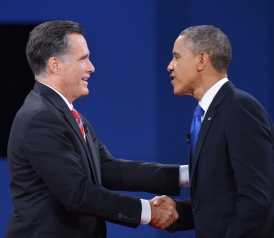
Defeated presidential candidate Mitt Romney was a guest ringside Saturday night at the fourth fight between Manny Pacquiao and Juan Manuel Marquez. Romney also visited with Pacquiao in his dressing room before the fight, wishing him well in the bout. "Hello Manny. I ran for president. I lost," Romney told the fighter, according to Pacquiao publicist Fred Sternburg. Pacquiao is a congressman in the Philippines, and has said previously he might run one day for the president of his country. Romney and his wife, Ann, were guests of Nevada State Athletic Commission chairman Bill Brady at the fight at the MGM Grand hotel arena. Brady hosted a fundraiser for Romney during the presidential campaign. The Romneys arrived during the undercard, drawing little reaction from the crowd.

Mohammed Morsi Cancels Controversial Decree But Pushes Referendum

Egyptian President Mohamed Mursi has cancelled a decree that gave him sweeping powers and sparked huge protests, but did not delay a referendum on a constitution as his opponents had demanded. The announcement came from the spokesman for politicians and other figures who took part in a national dialogue on Saturday convened by the Islamist president. But the main opposition group stayed away, so the talks had little credibility among protesters. One of the opposition's main demands was to scrap a referendum on a constitution that was drafted by an Islamist-led assembly. Liberals and others quit the assembly, saying their voices were not being heard. 

But that vote will go ahead on Dec. 15 as planned. Officials said those at Saturday's talks had discussed a delay but found legal obstacles prevented any change in the date for the referendum. The president issued a new decree in which the first article "cancels the constitutional declaration" announced on Nov. 22, spokesman Mohamed Selim al-Awa told a news conference. Last month's decree had led to protests and deadly violence. The new decree excluded some elements from the old decree that had angered the opposition, including one article that gave the president broad powers to confront threats to the revolution or the nation, wording that the opposition said gave him arbitrary authority to act.

Another article in the old decree had put beyond legal challenge any decision taken by the president since he took office on June 30 and until a new parliament was elected, a step that can only happen when a new constitution is in place. Although that article was not repeated, an article in the new decree put "constitutional declarations including this declaration" beyond judicial review. The new decree also outlined steps for setting up an assembly to draft a new constitution should the current draft be rejected at a referendum the decree said would be held on Dec. 15. The spokesman for the main opposition coalition that boycotted Saturday's talks, the National Salvation Front, said his group would meet on Sunday to discuss the announcement, but added his personal view was that it was not enough.

Scott Walker's Son Used Same-Day Registration Accompanied By The Governor

Wisconsin Gov. Scott Walker (R) may find same-day voter registration inefficient, but his son apparently finds it quite convenient. According to the Milwaukee Journal Sentinel, Matt Walker, a freshman at Marquette University, went to vote in Wauwatosa for the presidential election and registered while at the polls. A witness at the polling place said the governor accompanied his son. Wisconsin has had same-day registration since 1976. But at a recent speech in California, Walker said he would like to get rid of this law, citing the burden it placed on poll workers.

"States across the country that have same-day registration have real problems because the vast majority of their states have poll workers who are wonderful volunteers, who work 13-hour days and who in most cases are retirees," he said. "It's difficult for them to handle the volume of people who come at the last minute. It'd be much better if registration was done in advance of election day. It'd be easier for our clerks to handle that. All that needs to be done." Poll workers and election clerks have disputed Walker's characterization of same-day registration, and on Wednesday, he walked back his remarks.

"This is a ridiculous issue. My priority is about jobs, creating jobs," he told reporters. He did not, however, specify whether he would still sign a repeal bill if it came to his desk from the GOP-controlled legislature. Jocelyn Webster, a Walker spokeswoman, told the Milwaukee Journal Sentinel that Walker still believes ending same-day registration would make the electoral process easier for poll workers.

Friday, December 7, 2012

November Jobs Report: U.S. Economy Adds 146,000 Jobs As Unemployment Rate Drops

Stock futures jumped after the report. Dow Jones industrial average futures were down 20 points in the minutes before the report came out at 8:30 a.m., and just after were up 70 points. As money moved into stocks, it moved out of safer bonds. The yield on the benchmark 10-year U.S. Treasury note, which moves opposite the price, rose to 1.63 percent from 1.58 percent just before the report. Since July, the economy has added an average of 158,000 jobs a month. That's a modest pickup from 146,000 in the first six months of the year. The increase suggests employers are not yet delaying hiring decisions because of the "fiscal cliff." That's the combination of sharp tax increases and spending cuts that are set to take effect next year without a budget deal. Retailers added 53,000 positions while temporary help companies added 18,000 and education and health care also gained 18,000.

Auto manufacturers added nearly 10,000 jobs. Still, overall manufacturing jobs fell 7,000. That was pushed down by a loss of 12,000 jobs in food manufacturing that likely reflects the layoff of workers at Hostess. Sandy forced restaurants, retailers and other businesses to close in late October and early November in 24 states, particularly in the Northeast. The U.S. grew at a solid 2.7 percent annual rate in the July-September quarter. But many economists say growth is slowing to a 1.5 percent rate in the October-December quarter, largely because of the storm and threat of the fiscal cliff. That's not enough growth to lower the unemployment rate. The storm held back consumer spending and income, which drive economic growth. Consumer spending declined in October and work interruptions caused by Sandy reduced wages and salaries that month by about $18 billion at an annual rate, the government said. Still, many say economic growth could accelerate next year if the fiscal cliff is avoided. The economy is also expected to get a boost from efforts to rebuild in the Northeast after the storm.

Kate Middleton's Hospital Nurse Found Dead In London Days After Being Duped By Prank Callers

The hospital nurse who put through a prank call to Kate Middleton's private nurse earlier this week has been found dead in a suspected suicide, the Daily Mail reports. Jacintha Saldanha was found unconscious on Friday morning nearby King Edward VII Hospital in London, where she worked. A Scotland Yard spokesman said that the police were called and an ambulance arrived, but the woman was declared dead at the scene. The Daily Mail speculates that "one source indicated that the woman appeared to have killed herself." A rep for Scotland Yard only stated, "The death is not being treated as suspicious at this stage." 

This past Wednesday, the day after the pregnant Duchess of Cambridge was admitted at King Edward VII Hospital to be treated for hyperemesis gravidarum, two radio hosts from 2Day FM, a Sydney-based station, called up the hospital for an on-air prank. Hosts Mel Grieg and Michael Christian pretended to be Queen Elizabeth and the Prince of Wales, respectively, and were transferred by the receptionist to Kate's nurse. The nurse proceeded to reveal medical details to the supposed royal relatives, including the best time for them to come visit the pregnant duchess. This story is developing. The palace has released a statement: "The Duke and Duchess of Cambridge are deeply saddened to learn of the death of Jacintha Saldanha."

Marijuana Legalization Poll Finds Americans Want Federal Government To Leave States Alone


On Thursday, Washington became the first state to officially legalize marijuana, soon to be followed by Colorado as their new laws legalizing the drug for recreational use go into effect. A survey out Friday shows what Americans want the federal government to do about the states whose drug laws clash with national laws: Leave them alone.Fifty-one percent of Americans in the new HuffPost/YouGov poll said that in the two states that have legalized marijuana use for adults, the federal government should exempt any adults following state laws from federal drug law enforcement. Only 30 percent said the federal government should enforce its drug laws in those states in the same way it does in any other state.

A New York Times report has cast doubt on whether the two states will be able to put their new laws into effect unencumbered by the federal government, suggesting the Obama administration may pursue legal action to block the two states' laws, which contradict federal laws that make marijuana use illegal. The new HuffPost/YouGov poll suggests this would be an unpopular move by the federal government, although the survey asked about enforcement of drug laws against individuals, rather than action to block the state laws.

Exemptions for users and dispensaries in the states that permit medical marijuana were even more popular than the idea of states permitting recreational use. Fifty-eight percent of respondents favored exemptions from federal drug laws in those cases, and only 23 percent said they were opposed. Medical marijuana exemptions were popular even among some groups that did not favor exemptions for the two recreational marijuana states. For example, 40 percent of Americans age 65 and up opposed exemptions for adults using marijuana in the two states where it is legal compared to 35 percent who supported the exemptions. But of that same age group, 49 percent favored exempting medical marijuana patients and dispensaries, compared to 30 percent who opposed it. Republicans in the survey rejected exemptions for either recreational or medical marijuana, but were more split on an exemption for medical use: By only a 43 percent to 39 percent margin, they said the federal government should enforce its laws in medical marijuana states the same as it would in other states.

Monday, December 3, 2012

Judicial Vacancies Skyrocket During President Obama's First Term


As President Barack Obama winds down his first term in office, he won't be looking back with pride at his record on reducing federal judicial vacancies.There are currently 83 empty district and circuit court judge seats. That means Obama is poised to end the year with more vacancies than when he was sworn in -- there were 55 when he came in -- and with far fewer confirmed nominees than his two predecessors had by the end of their first terms. While former President Bill Clinton was at 200 and George W. Bush was at 205, Obama is at 160, according to data provided by the Senate Judiciary Committee.

Thirty-three of those 83 empty seats are considered "judicial emergencies," meaning that because of the number of vacancies at the circuit court level, the amount of cases per panel of judges [on a given court] exceeds 700, or stays between 500 and 700 for more than 18 months. In district courts, it means a single judge has more than 600 cases, or between 430 and 600 for more than 18 months. The more overloaded judges are, the more delayed the process of moving millions through the justice system.

Senate obstruction is the most widely cited source of the crisis. But Obama's record when it comes to nominating judges is also lackluster. He hasn't put forward as many nominees as his predecessors, a fact that Senate Judiciary Committee ranking member Chuck Grassley (R-Iowa) said is fueling the crisis with judicial vacancies. By this point in their presidencies, Clinton and Bush had nominated 247 and 231 judicial nominees, respectively. Obama has only put up 215.

But naming more nominees doesn't mean Senate Republicans would necessarily move any faster to confirm them, said a White House aide. "If my coffee pot only makes one cup per hour, no matter how many coffee beans I pour into it, the number of cups coming out will still be the same," said the aide. "It doesn’t matter how many more judges we jam into the pipeline, the vacancy rate doesn't change at all. The bottleneck is the Senate."

Indeed, Senate Republicans haven't been brewing much coffee with Obama the past four years. The pattern throughout the president's tenure has been uncontroversial judicial nominees clearing the Senate Judiciary Committee but going nowhere the Senate floor. Then, after months of opposition, GOP leaders agree to clear some of the backlog and long-stalled nominees sail through virtually unopposed.

Historically, senators from both parties stalled judicial nominees when those senators are in the opposite party of the sitting president. But what has changed is the degree to which obstruction has become standard operating procedure since Obama took office. After four years, Obama has seen about 75 percent of his nominees confirmed. By contrast, the Senate confirmed 81 percent of Clinton's nominees and 88.7 percent of Bush's nominees by this point in their presidency.

Hillary Is Running: A Dispatch From The Saban Forum

Hillary Clinton is running for President. And the Israeli political class is a full-blown train wreck. These are two conclusions, for whatever they are worth, based on a three-day conference I attended this weekend at the annual Saban Forum, in Washington, D.C.Sorry, America. You probably imagined we'd get a break from presidential campaigning, but Warren Buffett has other ideas. The billionaire investor just endorsed Hillary Clinton.A survey of attendees at this week's Take Back the American Dream conference in Washington, D.C. revealed that 59 percent of them want a female.

Sheldon Adelson Spent Far More On Campaign Than Previously Known


Casino magnate Sheldon Adelson vowed to spend as much as $100 million to defeat President Barack Obama and help the GOP take control of Congress. According to two GOP fundraisers with close ties to the Las Vegas billionaire, he made good on that promise -- and then some. Adelson ultimately upped the ante, spending closer to a previously unreported $150 million, the fundraisers said.Adelson, a fierce critic of Obama’s foreign and domestic policies, has said that his humongous spending was spurred chiefly by his fear that a second Obama term would bring "vilification of people that were against him." As that second term begins, Adelson's international casino empire faces a rough road, with two federal criminal investigations into his business.

This coming week, Adelson plans to visit Washington, according to three separate GOP sources familiar with his travel schedule. While here, he’s arranged Hill meetings with at least one House GOP leader in which he is expected to discuss key issues, including possible changes to the Foreign Corrupt Practices Act, the anti-bribery law that undergirds one federal probe into his casino network, according to a Republican attorney with knowledge of his plans.

During the election, Adelson told Politico that the Justice Department investigation, and the way he felt treated by prosecutors, was a primary motivation for his investment in Republican presidential nominee Mitt Romney and other GOP candidates. He put his money where his mouth was. The two GOP fundraisers, both with strong ties to Adelson, said that the casino mogul dished out close to $150 million, including between $30 million and $40 million to the Karl Rove-founded Crossroads GPS and at least $15 million to grassroots efforts with financial links to Charles and David Koch. Among other major beneficiaries of Adelson’s largess were the U.S. Chamber of Commerce, which received almost $5 million from Adelson, and the Republican Jewish Coalition, which got the bulk of its $6.5 million budget from him, the fundraisers said.

All of these are non-profit groups, which -- unlike the super PACs that raked in $54 million in funds from Adelson and his wife -- are not currently required to disclose their donors. Adelson’s public spending spree, larger than any other donor's in the last election, was made possible by two high court rulings in early 2010 that allowed corporations, unions and individuals to write unlimited checks to outside groups for political ads and other activities backing candidates.

The two fundraisers who provided information to The Huffington Post represented separate groups that each received seven-figure checks this year from Adelson. The fundraisers learned details of Adelson’s spending plans about a month prior to the election: one heard of them in a talk with the casino owner himself, while the other didn’t indicate if his information came from Adelson or a top aide to the billionaire. Both requested anonymity to protect their ties to Adelson and because they were not authorized to speak publicly about his giving.

Kate Middleton Pregnant: Confirmed By Buckingham Palace

The Duke and Duchess of Cambridge are expecting a baby, according to an official statement just released by palace officials, who confirm that Kate Middleton and Prince William, both 30, are adding a royal boy or girl to their mix. Kate has been admitted to the hospital for Hyperemesis Gravidarum, a "very acute morning sickness, which requires supplementary hydration and nutrients," according to the duke and duchess' official website. Their Royal Highnesses The Duke and Duchess of Cambridge are very pleased to announce that The Duchess of Cambridge is expecting a baby.

The Queen, The Duke of Edinburgh, The Prince of Wales, The Duchess of Cornwall and Prince Harry and members of both families are delighted with the news. The Duchess was admitted this afternoon to King Edward VII Hospital in Central London with Hyperemesis Gravidarum. As the pregnancy is in its very early stages, Her Royal Highness is expected to stay in hospital for several days and will require a period of rest thereafter. The official statement of Kate Middleton's pregnancy comes after an exhaustive set of baby rumors that have dogged the couple ever since their royal wedding in April 2011: On the pair's recent royal tour in Asia, Catherine declined wine in favor of water on several occasions, fueling speculation that she was expecting. Prince William also told a little boy that he wanted "two" children. Just a week earlier, Star magazine had breathlessly (and creepily?) declared that the couple had conceived on a "passionate night together" following the London Olympics. In November 2011, just six months after the wedding, In Touch pronounced Kate sih weeks along, but summer 2012 came and went without, obviously, a royal birth. (Palace officials had shot down those rumors anyway.)

Also in November 2011, Catherine declined to taste a peanut butter paste at a UNICEF event, leading to gossip that she was expecting. (Pregnant moms apparently often avoid peanut butter to help prevent allergy issues.) The new royal baby will obviously be the first for William and Catherine, who married in 2011 after a 10-year on-and-off courtship. He or she will be Queen Elizabeth II's third great-grandchild (after Savannah and Isla Phillips), Prince Harry's first niece or nephew and will make Pippa Middleton a proud aunt. Our biggest congratulations to the Palace! And for the rest of us: buckle up. It's going to be quite a year.

The Daily Shutting Down: News Corp. To End Daily iPad Publication


After months of downsizing and rumors of its imminent closing, News Corp. announced its decision to cease publication of The Daily effective mid-December. News Corp. made the announcement on Monday.

Murdoch called the daily iPad news publication, the only one of its kind, "a bold experiment in digital publishing and an amazing vehicle for innovation" that "could not find a large enough audience ... to convince us the business model was sustainable in the long-term."

Daily chief Jesse Angelo, who also serves as executive editor of the New York Post, will become publisher of The Post. According to the News Corp. press release obtained by Business Insider: As part of a digital restructuring initiative, the company will cease standalone publication of The Daily iPad app on December 15, 2012, though the brand will live on in other channels. Technology and other assets from The Daily, including some staff, will be folded into The Post.

According to AllThingsD, the iPad application employs roughly 120 staffers. In July, News Corp. laid off almost one-third of Daily employees (at the time—70 of its 150 staffers) and put the publication "on probation" just eighteen months after its debut.

The massive layoffs came days after News Corp. announced its decision to divide into two separate companies, divorcing its print publications from its broadcast operations. Murdoch also announced a series of executive appointments regarding the News Corp. split on Monday.

In July, the New York Times reported Daily was on track to lose an estimated $30 million a year. Sources told the New York Observer that the fate of the iPad application would be reassessed by the company in November, following the 2012 election.

News Corp. launched Daily in February 2011. Upon its arrival, Murdoch heralded the first daily iPad news publication as a wave of the future, with high hopes that the application would transform the business of news gathering and editing.

Thursday, November 29, 2012

Jan Brewer, Arizona Governor, Rejects Obamacare Health Insurance Exchange


Arizona won't help implement a key component of President Barack Obama's health care reform law, Republican Gov. Jan Brewer said in a letter to a federal health official Wednesday.Including Arizona, there currently are 17 states that won't create so-called health insurance exchanges online marketplaces where uninsured people and small businesses will choose health plans and learn whether they're eligible for tax credits. Thirty million people are expected to gain health coverage through the exchanges by 2022, according to the Congressional Budget Office.

Brewer blamed the Obama administration for her decision. "The state of Arizona has made significant progress in its planning and design configuration for all of the required health insurance exchange core functions," Brewer wrote to Gary Cohen, the director of the federal Office of Consumer Information and Insurance Oversight. The administration failed to issue regulations or provide detailed information to states fast enough, she charged. The health insurance exchanges must be operational on Oct. 1, 2013, when millions of people are expected to use them to shop for coverage for the following year.

Although the federal government has the authority to step in and create exchanges in states that don't build their own, lack of cooperation from states could hamper how well they function, and how many uninsured people get coverage.Brewer reiterated her "unwavering" opposition to Obama's 2010 health care reform law, but said in a written statement that "this has been one of the more difficult decisions in my career in public service." By rejecting a state-run health insurance exchange, Brewer is ceding control of the new Obamacare insurance market in her state to the federal government. "Though I am a steady advocate of local control, I have come to the conclusion that the state of Arizona would wield little actual authority over its 'state' exchange," she said in the statement.

The Obama administration last week published several critical regulations governing what benefits must be covered by health insurance sold on the exchanges and establishing consumer protections, such as a ban on discriminating against people with pre-existing conditions.Like Brewer, other governors have complained they had to wait too long for federal regulations they needed to help evaluate their options. However, 17 states and the District of Columbia moved ahead with plans to create their own health insurance exchanges even without those federal rules in place. Six states will manage exchanges jointly with federal authorities and the remainder have until Dec. 14 to declare their plans, according to the Henry J. Kaiser Family Foundation.

Lindsay Lohan Hauled Off After Alleged Assault

Actress Lindsay Lohan was arrested Thursday after police said she hit a woman during an argument at a New York City nightclub. The "Mean Girls" and "Freaky Friday" star was arrested at 4 a.m. and charged with third-degree assault. She left a police precinct nearly four hours later with a black jacket pulled over her head. She was wearing leggings, a green mini dress and high-heels, and drove off in a black SUV with a driver, a woman and another man who was seen going in and out of the precinct. She allegedly got into the spat with another woman at Club Avenue, in Manhattan's Chelsea section.

She struck the woman in the face with her hand, police said. The woman did not require medical attention. Lohan's publicist did not immediately return a call for comment. The arrest is Lohan's latest brush with law enforcement in New York City. She was involved in a NYPD investigation in September after alleging a man had assaulted her in a New York hotel, but charges against the man were later dropped. Also in September, the actress was accused of clipping a man with her car outside another Manhattan nightclub, but prosecutors chose not to move ahead with charges. In October, police were called to her childhood home on Long Island after a report of a fight between her and her mother. An investigation revealed "no criminality." The actress was also involved in a car accident in California this summer that sent her and an assistant to a hospital, but didn't result in serious injuries for anyone.

The accident remains under investigation. In May, she was cleared of allegations that she struck a Hollywood nightclub manager with her car. Lohan remains on informal probation for taking a necklace from a jewelry store without permission last year. That means she doesn't have to check in with a judge or probation officer but could face a jail term if arrested again. Her latest film, "Liz & Dick," in which she portrays screen icon Elizabeth Taylor, premiered on Lifetime on Sunday. Lohan also recently filmed "The Canyons," an indie film written by "Less Than Zero" and "American Psycho" author Bret Easton Ellis.

Syria's Internet Reportedly Shut Down


Internet service throughout Syria apparently went down on November 29.The country, embroiled in a civil war, dropped offline at 10:26 a.m. UTC (12:26 p.m. local Damascus time), according to research firm Renesys.

"In the global routing table, all 84 of Syria's IP address blocks have become unreachable, effectively removing the country from the Internet," reads a post on the company's blog, published on Thursday morning.When this occurs, Internet traffic coming into and going out of the country stops. The government of Egypt during the Arab Spring uprisings in early 2011 implemented an unprecedented crackdown on the Internet, ordering the nation's Internet service providers to cease international communications.

Activists and authorities in Syria also told the AP on Thursday that cell phone networks and landlines were also unavailable in parts of the capital."The government has previously cut phone lines and Internet access in areas where regime forces are conducting major military operations," reports the AP.

AllThingsD notes that tweeters are using the hashtag #SyriaBlackout to discuss the outage.

UPDATE 1: Calling this the worst Syrian communications disruption since the uprisings began over a year and a half ago, Reuters reports that the Assad's forces are said to be preparing for a "military showdown around Damascus."

"Rebels and activists said the fighting along the road to Damascus airport, southeast of the capital, was heavier in that area than at any other time in the conflict," writes Reuters. At the time of writing, only the Dubai-based Emirates airline had suspended flights into Damascus, per Reuters.

UPDATE 2: Internet content delivery network Akamai corroborates Renesys' earlier report of a total Internet blackout in Syria. The company on Thursday morning tweeted the following: "Akamai traffic to Syria has dropped to zero as well."

Akamai followed that tweet with a chart visualizing a dramatic drop-off in Internet traffic that evidently shortly before 10:30 a.m. local time:

Slate is reporting that top news sites located in Syria, including Syrian Arab News Agency (SANA) were offline before noon EST.Some Twitter users are providing dial-up numbers that Syrian 'net users may be able to use to get back online.

UPDATE 3: Reuters reports that Syria's communication minister attributed the Internet outage to "terrorists."

"It is not true that the state cut the Internet. The terrorists targeted the Internet lines, resulting in some regions being cut off," the official said according to a "pro-government TV station," per Reuters. He also said that work is underway to repair the damage.Take a look at the slideshow (below) to see how Twitter is reacting to the blackout in Syria.

Friday, November 9, 2012

Obama Addressing 'Fiscal Cliff' In White House Speech

Newly re-elected President Barack Obama will use a White House appearance to set the tone for upcoming talks with congressional Republicans on avoiding the so-called fiscal cliff. Republicans continue to draw a line in the sand against higher tax rates for upper-income earners as they seek to topple the conventional wisdom that Obama has the upper hand in upcoming negotiations on averting the potentially economy-crippling set of tax increases and automatic spending cuts due to hit in January. Obama faces a tough, core decision: Does he pick a fight and risk a prolonged impasse with Republicans or does he rush to compromise and risk alienating Democrats still celebrating his victory? Many of his Democratic allies hope Obama will take a hard line when he addresses the matter Friday. Republicans warn that a fight could poison efforts for a rapprochement in a bitterly divided Capitol and threaten his second-term agenda. Obama has been silent since his victory speech early Wednesday morning, but Capitol Hill Republicans have filled the vacuum with vows to stand resolutely against any effort by the president to fulfill a campaign promise to raise the top two income tax rates to Clinton-era levels. "Raising tax rates is unacceptable," House Speaker John Boehner, R-Ohio, declared Thursday on ABC. "Frankly, it couldn't even pass the House. I'm not sure it could pass the Senate."
A lot is at stake. A new Congressional Budget Office report on Thursday predicted that the economy would fall into recession if there is a protracted impasse in Washington and the government falls off the fiscal cliff for the entire year. Though most Capitol-watchers think that a long deadlock is unlikely, the analysts say such a scenario would cause a spike in the jobless rate to 9.1 percent by next fall. Some analysts believe that the fiscal cliff is more like a fiscal slope and that the economy could weather a short-term expiration of the Bush-era tax cuts and that the government could manage a wave of automatic spending cuts for a few weeks. But at a minimum, going over the fiscal cliff would mean delays in filing taxes and obtaining refunds and would rattle financial markets as the economy struggles to recover. The CBO analysis says that the cliff – a combination of automatic tax increases and spending cuts – would cut the deficit by $503 billion through next September, but that the fiscal austerity would cause the economy to shrink by 0.5 percent next year and cost millions of jobs. The new study estimates that the nation's gross domestic product would grow by 2.2 percent next year if all Bush-era tax rates were extended and would expand by almost 3 percent if Obama's 2 percentage point payroll tax cut and current jobless benefits for the long-term unemployed were extended as well. All sides say that they want a deal and that now that the election is over everyone can show more flexibility than in the heat of the campaign.

Obama is not expected to offer specifics immediately. His long-held position – repeatedly rejected by Republicans – is that tax rates on family income over $250,000 should jump back up to Clinton-era levels. Republicans say they're willing to consider new tax revenue but only through drafting a new tax code that lowers rates and eliminates some deductions and wasteful tax breaks. And they're insisting on cuts to Medicare, Medicaid and food stamps, known as entitlement programs in Washington-speak. The current assumption is that any agreement would be a multistep process that would begin this year with a down payment on the deficit and on action to stave off more than the tax increases and $109 billion in across-the-board cuts to the Pentagon budget and a variety of domestic programs next year. The initial round is likely to set binding targets on revenue levels and spending cuts, but the details would probably be enacted next year. While some of that heavy work would be left for next year, a raft of tough decisions would have to be made in the next six weeks. They could include the overall amount of deficit savings and achieving agreement on how much would come from revenue increases and how much would be cut from costly health care programs, the Pentagon and the day-to-day operating budgets of domestic Cabinet agencies. Democrats are sure to press for a guarantee that tax reform doesn't end up hurting middle-income taxpayers at the expense of upper-bracket earners. Republicans want to press for corporate tax reform and a guarantee that the top rate paid by individuals and small businesses goes down along the way.

Mitt Romney 'Shellshocked' After Lost Election, Adviser Says

As Republicans search for reasons why they came up short in Tuesday's elections, anonymous Mitt Romney advisers have described what it was like to be with the former governor as he came to terms with his loss.

"He was shellshocked," one adviser told CBS News.
Another unnamed senior adviser explained that as returns came in and battleground states went into President Barack Obama's Electoral College column, they felt their paths to potential victory narrowing. CBS reports that the campaign was unprepared for this in part because it had ignored polling that showed the races favoring Obama. Instead, it turned to its own internal "unskewed" polls, which it believed more accurately reflected the situation on the ground. They didn't.On the eve of the election, a number of polling aggregators, including HuffPost's Pollster and New York Times' FiveThirtyEight, showed Obama with a huge statistical advantage over Romney.When it was clear that Romney had lost the race and had to concede, his personal assistant, Garrett Jackson, called his counterpart in the Obama campaign, Marvin Nicholson, to connect the two men.

As CBS' Jan Greenburg writes in her article:

Romney was stoic as he talked to the president, an aide said, but his wife Ann cried. Running mate Paul Ryan seemed genuinely shocked, the adviser said. Ryan's wife Janna also was shaken and cried softly.
The New York Times' tick-tock of the events that night at the Boston Intercontinental Hotel includes this anecdote: Bob White, a close Romney friend and adviser, was prepared to tell the waiting crowd that Mr. Romney would not yet concede.

But then, Mr. Romney quietly decided it was over. "It's not going to happen," he said.As Ann Romney cried softly, he headed down to deliver his speech, ending his second, and presumably last, bid for the White House. As evidence of the Romney campaign's sincere belief that the former Massachusetts governor would emerge victorious on Tuesday night, the Boston Globe reported Thursday that it had planned to fete Romney's election with an eight-minute display of fireworks over Boston Harbor.

"It was not an intense, grand finale-type of display for eight minutes, but it certainly was a fast-paced show to cap off the evening, if it were necessary," Steve Pelkey, the CEO of Atlas Professional Fireworks Displays, told the Globe.Romney also told reporters on his campaign plane earlier this week that while he had written a victory speech, he hadn't prepared concession remarks.

Tuesday, November 6, 2012

Chris Christie Denied Mitt Romney Request To Appear At Campaign Event Days Ahead Of 2012 Election

New Jersey Gov. Chris Christie, who was effusive in his praise of President Barack Obama when the two leaders toured damage from Hurricane Sandy last week, turned down a request by Mitt Romney to appear with him at a rally on Sunday night in Pennsylvania, The Huffington Post has learned. Christie's decision will only add to questions among Republicans about what the governor -- who is up for reelection a year from now -- is thinking, and why he went out of his way to heap praise on the president, and then refused to appear with Romney. The Romney rally was held at a farm in Morrisville, Pa., not more than 20 minutes from Trenton, the New Jersey capital. The physical proximity of the event to New Jersey only added to questions in the Romney campaign about why Christie chose not to come. "You can't tell me he couldn't have gone over there for a night rally," a Romney campaign source told HuffPost. Romney, at the rally on Sunday night, praised Christie's handling of the storm from the podium, saying that the governor was "giving it all of his heart and his passion to help the people of his state.

"They're in a hard way, and we appreciate his hard work. Thank you, governor," Romney said. Christie, who considered a run for the presidency himself, had been one of Romney's most effective and vocal surrogates, using his blunt and plainspoken style to great effect for the Republican nominee. He was scheduled to campaign for Romney last week until the storm hit. But Christie's keynote speech at the Republican National Convention in August was a disappointment to many Republicans, and while no one in the GOP expected Christie to do anything other than appear with Obama last week to tour storm damage, it was the degree to which he went out of his way to sing the president's praises that surprised those in the governor's party.

An aide to Christie, who agreed to speak to HuffPost about the governor's decision in exchange for anonymity, noted that New Jersey still has 700,000 people without power, the state is on an odd-and-even day gasoline rationing system, there is still massive flooding in parts of the state, and many residents remain displaced. "The entire shore is devastated," the Christie aide said. "And if you're here on the ground, you have an appreciation of how tough it is." "All in all, it's a lot of things that require focus. We're moving toward sort of a new normal here in New Jersey," the aide said. "The governor's been pretty clear that his number one priority is the safety and security of New Jerseyans and all his efforts are focused on Hurricane Sandy recovery right now."

Friday, November 2, 2012

Stop Worrying: 2 Tools That Work


Are you a worrier? Do you come from a long line of worriers? Did you have fear-filled, overprotective parents or grandparents?

Here's the good news: It's not biological. There is no "worry" gene. What it is, instead, is a learned behavior. Nurture ousting nature.Worrying is actually a socially acceptable way of saying you live in fear of what may happen in the future. Most likely, you also lack present-moment consciousness, since you cannot be here now while constantly projecting catastrophically into the future.

It is an anxiety-provoking, ingrained thought pattern that can cause a host of stress-related physical and psychological issues.But don't worry: If you are a worrywart, there are some things you can do to get off the "What If?" highway.Two of my favorite tools -- which help improve your ability to keep your thoughts on the present moment -- are:

1. To allot five minutes a day to worrying. If you find catastrophic thoughts creeping up at another time, remind yourself that you cannot think about these until your designated worry time. Go back to focusing on what is happening right now. (When you get to your worry time, you may not even be able to remember what it was you were worrying about earlier.)

2. Try the "Then What" exercise. Imagine the event you are concerned about actually happening, then ask yourself, "Then what?" From that point, ask "then what?" again. Keep going until you have reached the end of the questioning. Oftentimes, you will see that the fear is bigger in your mind than what could actually happen. This exercise helps create perspective. It also gives you the opportunity to see how much time you may be wasting worrying about what might happen rather than focusing on what is actually happening.

Allow yourself to step out of fear and into freedom. The only moment you are guaranteed is the one that is happening right now. When you project into the future -- and a dismal one at that -- you miss your life as it is happening and draw the misery-perception-turned-reality toward you since you are resonating on that energetic frequency. (Your mind is like a garden; what you nurture and put your attention on, grows. Why not choose to nurture what you desire rather than what you fear?)

I have been through many traumatic and scary experiences in my life, from cancer to raising teenage sons. Worrying about them would not have changed how I handled them; it would only have robbed me of moments that I cannot get back.Worrying and preparing are two different things, so do not confuse the two. I am not saying be unprepared, I am only suggesting that ruminating on your fear fantasy does not better prepare you for anything.

Let's get honest and share -- we've all been there or are struggling still, so no need to judge or hold back your feelings. Are you an excessive worrier? What triggers your worry muscle? Are you confused by the differences between being prepared and worrying? What tools have you discovered that yank you out of future-tripping and back to the here and now?

Monday, October 29, 2012

Hurricane Sandy Eyes DC, Baltimore, Philadelphia And New York Photos

A fast-strengthening Hurricane Sandy churned north Monday, raking ghost-town cities along the Northeast corridor with rain and wind gusts. Subways and schools were closed across the region of 50 million people, the floor of the New York Stock Exchange was deserted, and thousands fled inland. Forecasters expected the monster hurricane to make a westward lurch and aim for New Jersey, blowing ashore Monday night and combining with two other weather systems to create an epic superstorm. Its projected path put New York City and Long Island in the danger zone for a huge surge of seawater made more fearsome by high tides and a full moon. "This is the worst-case scenario," said Louis Uccellini, environmental prediction chief for the National Oceanic and Atmospheric Administration. By late morning, the storm's top winds had strengthened to 90 mph. It was about 200 miles southeast of Atlantic City, N.J., where the emptied-out streets were mostly under water and where an old section of the historic boardwalk broke up and washed away. Authorities moved to close the Holland Tunnel, which connects New York and New Jersey, and a tunnel between Manhattan and Brooklyn. Street grates above the New York subway were boarded up, but officials worried that seawater would seep in and damage the switches.
Because the storm is so big, with tropical storm-force winds extending almost 500 miles from its center, it could upend daily life for big cities and small towns alike across the Northeast – including Washington, Baltimore, Philadelphia, New York and Boston – and as far west as the Great Lakes. Up to 3 feet of snow was forecast for the West Virginia mountains. Millions of people in the storm's path stayed home from work. Subways, buses and trains shut down, and more than 7,000 flights in and out of the East were canceled, snarling travel around the globe. Hundreds of thousands of people were under orders to flee the coast, including 375,000 in lower Manhattan and other parts of New York City, but authorities warned that the time to get out was short or already past. "I think this one's going to do us in," said Mark Palazzolo, who boarded up his bait-and-tackle shop in Point Pleasant Beach, N.J., with the same wood he used in past storms, crossing out the names of Hurricanes Isaac and Irene and spray-painting "Sandy" next to them. "I got a call from a friend of mine from Florida last night who said, `Mark, get out! If it's not the storm, it'll be the aftermath. People are going to be fighting in the streets over gasoline and food.'" President Barack Obama declared emergencies in Massachusetts, Connecticut, Rhode Island, New York, New Jersey and Pennsylvania, authorizing federal relief work to begin well ahead of time. He promised the government would "respond big and respond fast" after the storm hits.

10 Ways To Soothe A Sore Throat

A sore throat can be the first sign of a cold, a side effect of strained vocal cords, or an indication of something more serious (like strep throat). More from Health.com: Superfoods That Fight Colds Stop a Cold in Its Tracks Healthy Chicken Soup Recipes Regardless of the cause, your immediate concern when soreness strikes is how to get relief, fast. You may be tempted to run to your doctor, but some of the best treatments are home remedies and over-the-counter meds, says Jeffrey Linder, M.D., an internist at Brigham and Women's Hospital, in Boston. Here are 10 to try the next time you're feeling scratchy, hoarse or just plain sick.

Andrew Sullivan Clashes With George Will On ABC 'This Week'

Andrew Sullivan clashed with ABC News' George Will during the roundtable discussion on ABC's Sunday public affairs program "This Week." During a conversation on race and the 2012 election, Sullivan charged that if "Virginia and Florida go back to the Republicans," the electoral map will look "like the confederacy entirely." He added, "You put the map of the Civil War over the electoral map, you've got the Civil War." Will disagreed. "Democrats have been losing the white vote constantly since 1964, so that's not new," he said. He then added that there were two ways to explain the discrepancy in caucasian individuals who voted for [President] Obama in 2008, but not again in 2012. One explanation, Will said, was that "a lot of white people who voted for Obama in 2008 watched him govern for four years and said, 'Not so good, let's try somebody else.'" He then described the alternative explanation, and dubbed Sullivan's statement the "confederacy hypothesis...those people somehow for some reason in the last four years became racist." "No, that's not my argument at all, George," Sullivan said. "I'm just pointing out the fact that the white people who've changed their minds happen to be in Virginia and Florida. And if you actually look at the map—" "But that is not true," Will interrupted. Sullivan attempted to continue but Will said, "Andrew has made an empirical statement that is checkable and false, which is that the people moving, or the white people moving away are in those two states."

Paul McCartney Says Yoko Ono Wasn't Responsible For Breaking Up The Beatles


Paul Mccartney Yoko Ono Beatles BreakupYoko Ono has long been targeted as a scapegoat to lay blame for the breakup of The Beatles, but Paul McCartney is saying she wasn't the cause. "She certainly didn't break the group up, the group was breaking up," McCartney says in an interview with David Frost which is airing on Frost's TV show next month. McCartney admits in the interview that it was hard to have Ono constantly around, but also credits her with much of Lennons success such as writing "Imagine," saying, "I don't think he would have done that without Yoko." While Frost first interviewed McCartney in 1964, this most recent interview was one of the longest the Beatles great has ever given. For more, head over to The Guardian. Photos courtesy of Robert Whitaker on behalf of LIFE Books

Wednesday, August 22, 2012

Worst New TV Shows Of 2012-2013: TV Critics Share Their Picks

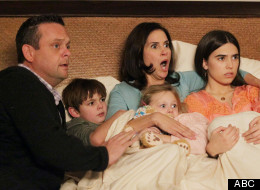
The Neighbors
HuffPost TV rounded up 20 of the top TV critics in the country to share their picks and, not surprisingly, no one pulled any punches with this topic. At all. But it wasn't totally unanimous -- although there is a clear loser here, 10 different shows actually received shout-outs for their awfulness. Now we're not saying these shows won't be huge hits -- inevitably, there are always a few shockingly bad shows each season that become huge ratings surprises. We're just saying we can't condone you wasting your time watching them. So without further ado, watch this hilarious video to get all our worst new show picks in under four minutes.

 A special shout-out to all of the critics who shared their opinions, in order of appearance: Gail Pennington from the St. Louis Post-Dispatch; Jarett Wieselman from ETonline and TheInsider.com; Jace Lacob from The Daily Beast; Carina MacKenzie from Zap2it; Eric Deggans from the Tampa Bay Times; Michael O'Connell from THR.com; Alan Sepinwall from HitFix; Melanie McFarland from IMDb TV; Denise Martin from Vulture; HuffPost TV's own Mo Ryan; Alyssa Rosenberg from ThinkProgress.org and Slate; Ken Tucker from Entertainment Weekly; Damian Holbrook from TV Guide Magazine; Sarah Rodman from The Boston Globe; Matt Roush from TV Guide Magazine; Ellen Gray from the Philadelphia Daily News; yours truly; Dan Fienberg from HitFix; and Todd VanDerWerff from The A.V. Club.

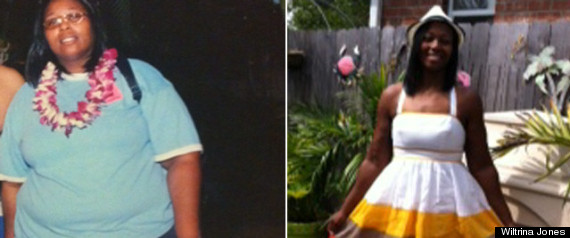
Wiltrina Jones Lost More Than 200 Pounds And Is Training For A Fitness Competition

Wiltrina Jones I Lost WeightHow I Gained It: I have battled obesity for the majority of my life. I was in a host of activities growing up, like track and field, cheerleading and gymnastics. Although I was active, I still seemed to load up on all the wrong foods. I remember in the sixth grade we had to be weighed for something and I weighed 107 pounds. I don't see that as being big today, but back then I was the heaviest girl in my classroom. This bothered me tremendously. I think at that moment that's when I considered myself fat, at least subconsciously. I worked in the restaurant industry as a teen in high school, through college and for the majority of my adult life. I always had access to food because I was always around food, maybe even at half price. I knew I was gaining weight, but I always said to myself, "I don't eat that much, so why am I gaining weight?" I often went on fad diets but never kept the weight off because I always went back to how I was accustomed to eating. I never took pictures and never wanted anyone to take pictures of me either.

I knew how I looked, I just didn't want to accept or face it. It was easier to block it out and not face the person I allowed myself to become. I just channeled all of my energy into work, trying to be the best at everything else in my life. I was the girl that watched “The Biggest Loser” every season from start to finish sitting there eating chips and Oreos while saying, “Wow, I wish I had the strength to do what they are doing, I wish I had their drive and dedication.” It just never clicked what I was actually doing to myself. I would try to do workouts on On Demand but couldn't last through the warm up. I would be out of breath and give up because I felt it was too hard and I couldn't keep up. So I just returned back to my old behaviors of eating and not exercising. Truth be told, I was miserable. Breaking Point: I was 39 years old in 2008 and visited a website where you could see old friends from high school. I was on there looking at my old classmates who I graduated with and came across two of my friends who were also in the marching band with me. Looking at them jolted something inside of me. I sat there with tears in my eyes, wondering how we could be the same age and they look like that and I look like this. These two young ladies were fit and I wanted that too. I made up my mind at that moment that I wanted to lose weight. How I Lost It: It didn't start instantaneously, but I knew I had to do something.

So I started one day going to Gold's Gym. I would walk on the treadmill for 30 minutes and then run out the door as soon as I was done. It was overwhelming; I was out of breath and I didn't want to do anything else. Within five months I had lost 68 pounds. But I had knee pain that wouldn't go away, and eventually I had to stop going to the gym. My doctor told me it was because of my weight. I suffered with the pain for 10 months, and gained every bit of the weight back and then some. I was devastated. My knee pain continued to the point that it started giving out on me. My back and legs were in so much pain, too. I was on acid reflux meds and pain meds for my back and my knees. I stopped weighing myself at the doctors because it was pointless; the scale only went to 350. My doctor gave me a shot of cortisone in the knee and said if that didn't work he would need to do surgery. I made a promise to God if I felt better I wasn't going to do this to myself again. Well, I felt better, but didn't have a plan -- yet I knew I was going to do something. I talked to a client of mine who also went to Gold's Gym.

She gave me a diet to try, but it was just that, a diet, and I needed something I could do for the rest of my life. I tracked my progress for a month of eating no carbs. I was fascinated by the First Lady and her fight against obesity, so I took what I learned from her and coupled it with a host of recipes that I created. Today I eat clean. I eat six to seven small meals a day, of things like protein shakes, baked chicken breast, broccoli, tilapia, sweet potatos and more. I work out six days a week. I do daily cardio running or the Stairmaster. I focus on different body parts daily for strength, like triceps, biceps, back, legs, abs, glutes, deltoids, etc. I love to work out; it's my life. I get asked constantly how I lost the weight and I listen to so many stories. I tell them I truly understand I used to be you. I let them know it's not easy but that it is definitely worth it. It's not about how fast it comes off, but about getting healthy and changing your lifestyle. Today, I'm getting my body ready for a fitness competition. Everyone seems to not remember me 200 pounds heavier, but I do. I love me today.

People Magazine's Summer Slim-Down Special

2012-08-20-peoplecover.jpgMichelle Mohr thought losing weight was impossible. "I remember sitting on the couch and bawling, 'I'm never going to be thin!'" she told People magazine, It's a feeling we hear all too often from readers who share with us their stories of weight loss success. Whether it's due to non-existant exercise habits, a lack of nutritional guidance, a serious health issue or other concerns, extra weight can make a healthy lifestyle seem like nothing more than a dream. But Mohr, 27, and the four other people profiled in People's Summer Slim-Down Special, are proof that it can be a reality. She told the magazine she would eat pizza, fries and nachos for lunch at school, and two plates of spaghetti for dinner -- after having a family-sized box of stuffing as a snack. Today, she's 100 pounds lighter, with the help of magazines and online videos to learn about healthy living. "I love having confidence," she said.

Maria Sharapova's Dress On Jimmy Fallon Is Just Barely Covering The Tennis Star


maria sharapova pictures
It must be pretty nice to be Maria Sharapova these days. After winning the silver medal at the Olympics earlier this month, the Russian tennis star launched a brand of gummy candies called Sugarpova (who knew the athlete had such a sweet tooth?) and graced the cover of Hamptons magazine. Maria clearly had plenty to discuss during her appearance on "Late Night With Jimmy Fallon" last night, but we were a bit distracted by her dress. The 25-year-old opted for a not-so-standard LBD featuring sheer paneling that strategically accentuated her, um, collarbone and extended down her back. She also wore black strappy sandals and chandelier earrings, but we can't imagine that too many people took notice of her accessories. The blonde athlete could definitely be confused for a supermodel -- especially in this getup. Maria managed to pull off the risqué look and avoided any wardrobe malfunctions (phew). And we think she looked pretty gorgeous. What do you think of Maria's sheer dress? Would you wear it?